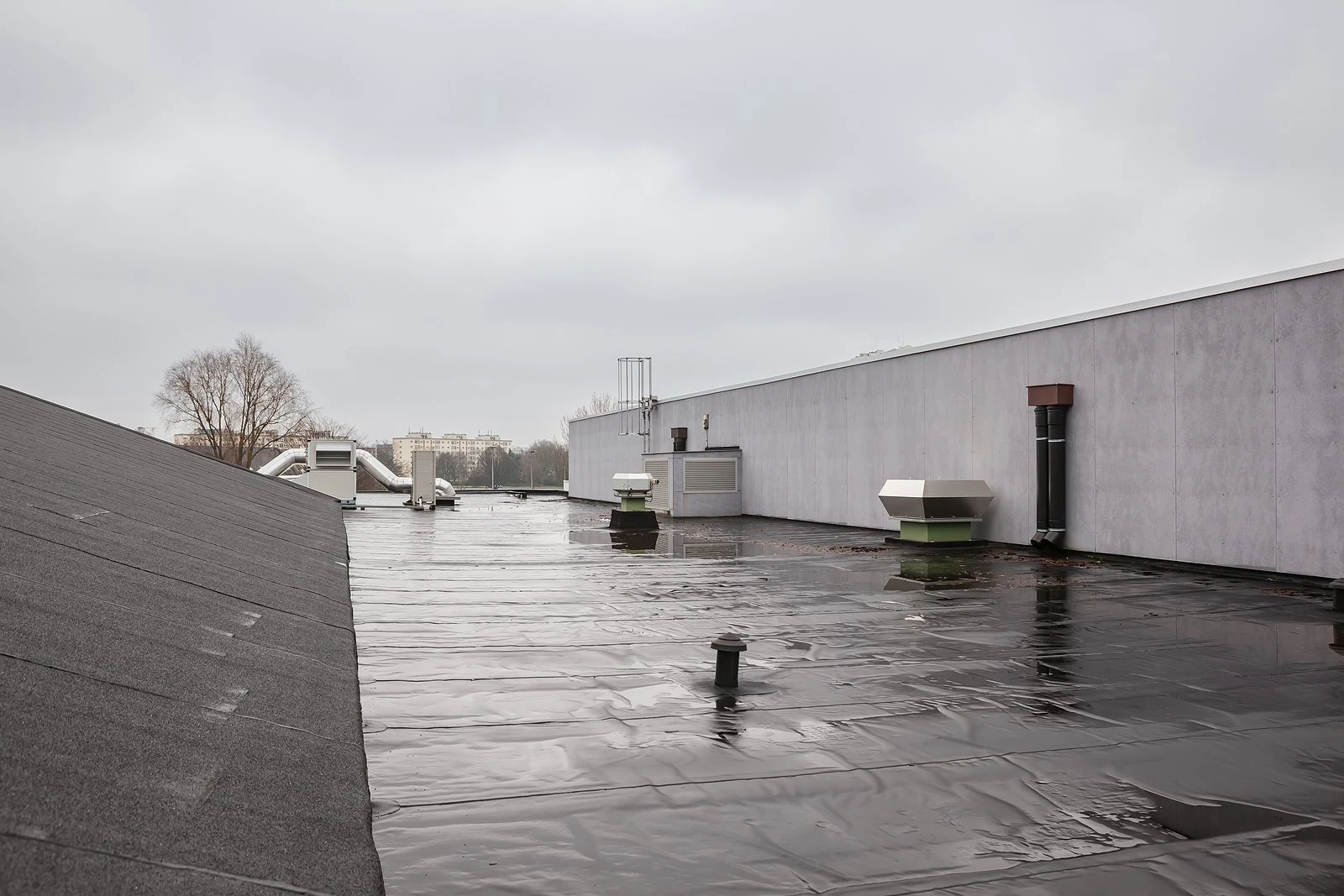
Office Complex Roofing in Bend, OR
Office complex roofing in downtown Bend and the Old Mill business park, planned around tenant workday access and high-desert UV and freeze-thaw exposure.
Roofing Office Buildings From Downtown to the Old Mill Business Park
Bend's office footprint runs from older downtown buildings near Wall and Bond Streets to newer business park construction around the Old Mill District and out toward the airport business area. Each of those buildings puts a different demand on us, but the roofs all answer to the same high-desert weather regardless of when they were built.
Older Downtown Buildings Carry Roof Histories That Don't Match the Drawings
Downtown office buildings in Bend have often gone through multiple renovations, tenant build-outs, and ownership changes, and the roof rarely gets updated documentation to match. We start every downtown office inspection by establishing what's actually up there now, membrane type, patch history, and equipment additions, rather than relying on whatever plans the owner has on file.
Rooftop HVAC added during a tenant improvement project is a common source of undocumented penetrations on these buildings, and we've found flashing details on downtown roofs that clearly weren't installed by a roofer at all.
Buildings along Wall and Bond Streets in particular have often gone through multiple facade and interior renovations without a matching roof update, and that gap between what the building looks like from the street and what condition the roof is actually in is one of the more common surprises we run into during a first inspection for a new downtown client.
Newer Business Park Buildings Still Need a Real Inspection, Not Only a Warranty Check
Office construction in the business park areas near Old Mill and toward the airport tends to be newer, but a newer roof isn't automatically a problem-free roof. We still walk these roofs on a regular schedule, because a manufacturer warranty covers material defects, not installation issues or damage from equipment added after the original build.
Tenant Workday Access Shapes Every Schedule
Office buildings run on a predictable business-hours schedule, which actually makes scheduling easier than a 24-hour facility, but it also means noise and vibration during work hours can disrupt calls, meetings, and concentration in ways that matter to tenants. We favor early morning or after-hours work for the noisiest phases of any office reroof, keeping daytime work to lower-impact tasks.
Business park buildings near the airport and out toward Juniper Ridge tend to have simpler tenant mixes, often a single company per building, which can actually make scheduling more flexible since we're coordinating with one facilities contact instead of a dozen different tenant preferences across a downtown high-rise.
Multi-tenant office buildings add a coordination layer similar to a retail strip center, where we need sign-off from property management and sometimes individual tenants before disruptive work windows get scheduled.
UV and Freeze-Thaw Hit Flat Office Roofs the Same Way They Hit Any Commercial Roof
A low-slope office roof in Bend takes the same intense high-desert UV and the same freeze-thaw cycling at parapets and drains as any other flat commercial roof in this market. We don't treat an office building as lower priority just because the occupancy pattern is calmer than a hospital or grocery store. A membrane that's chalking from UV exposure or a parapet cap working loose from freeze-thaw needs the same attention here as anywhere else.
What We Check on an Office Complex Roof
Every office roof inspection covers the same ground, whether the building is downtown or in a newer business park:
- Undocumented rooftop equipment and tenant improvement penetrations
- Membrane UV exposure and coating condition across the full field
- Parapet, coping, and drain condition through freeze-thaw cycling
- Warranty status and what it actually covers versus what it doesn't
- Tenant and property management coordination for noise-sensitive work windows
- Interior ceiling or tenant-reported leak history cross-checked against the roof
That inspection sets the baseline for whether an office roof needs targeted repair, a coating cycle, or a full replacement plan.
Research and office space tied to the OSU-Cascades campus area has added a newer category of building to this market, one that often combines lab-adjacent mechanical needs with standard office occupancy under a single roof. We treat that hybrid equipment load the way we would a light industrial building rather than assuming it fits the same profile as a conventional office tenant space, and we ask about any planned lab or research expansion before finalizing a roof scope so the structure can carry equipment that hasn't been installed yet.
Questions Office Property Managers Ask
Can roof work happen without disrupting our tenants' workday?
Most disruptive work gets scheduled early morning or after hours, with lower-impact tasks handled during the day so tenants aren't dealing with constant noise.
Our roof is under ten years old, why is it already showing problems?
High-desert UV and freeze-thaw cycling age a roof faster here than in a milder climate, and undocumented tenant improvement penetrations often accelerate wear.
Does a manufacturer warranty cover everything we might need repaired?
No, warranties typically cover material defects only, not installation issues or damage from equipment added after original construction. We review the actual terms with you.
How do you coordinate work across a multi-tenant office building?
We work with property management to notify tenants, schedule noise-sensitive phases appropriately, and route access away from busy entrances.
What's the first sign our office roof needs more than a patch?
Recurring leaks at the same location, visible membrane chalking, or loose parapet caps are all signs worth a full inspection before another patch gets applied.
Related
Ready to review the roof scope?
Request a Roof Assessment