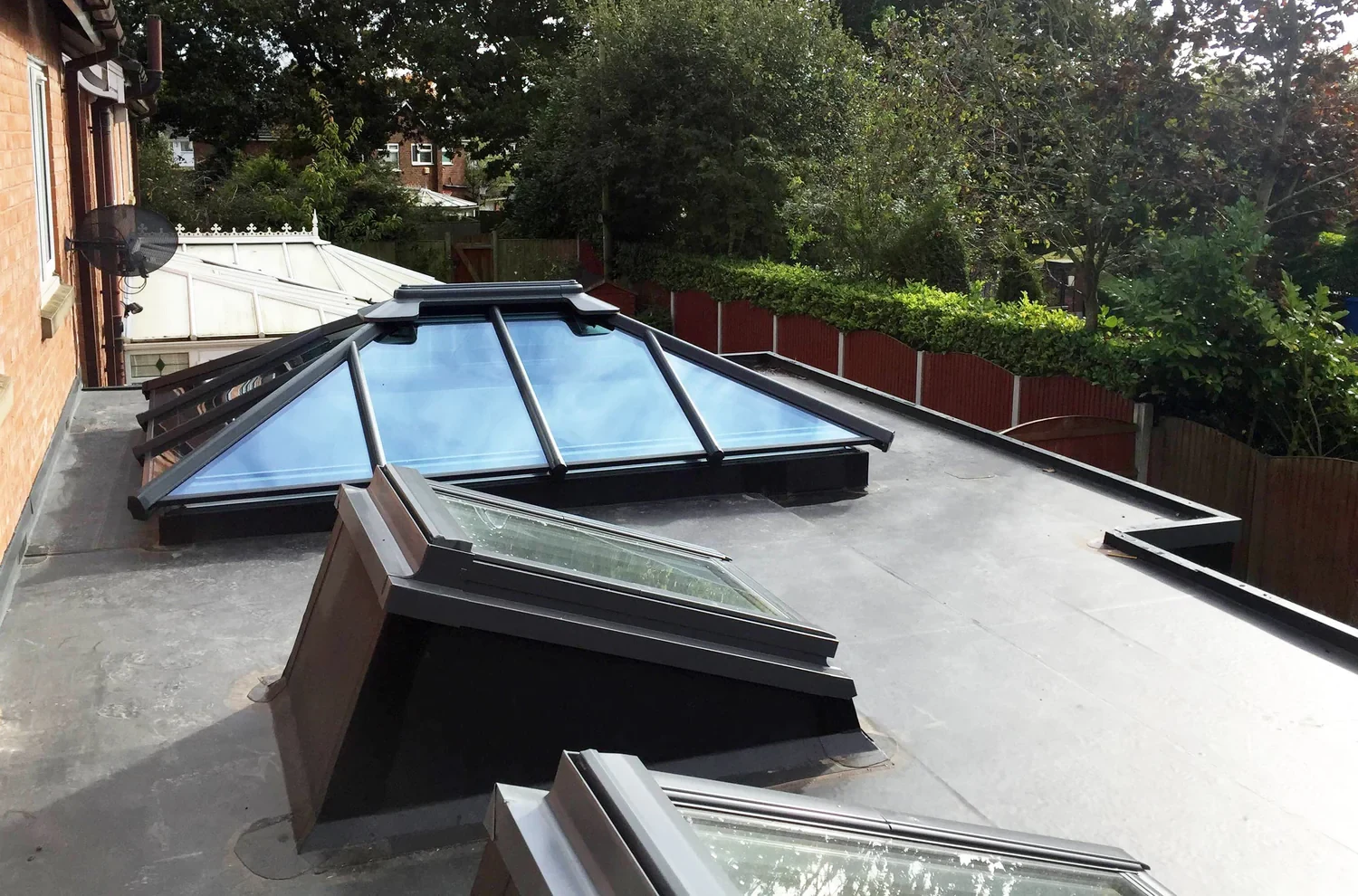
Black EPDM Roofing in Bend, OR
Black EPDM roofing for Bend commercial buildings, weighed against high-desert UV exposure, big daily temperature swings, and Cascade snow load demands.
Black EPDM on Bend's Older Commercial Roofs
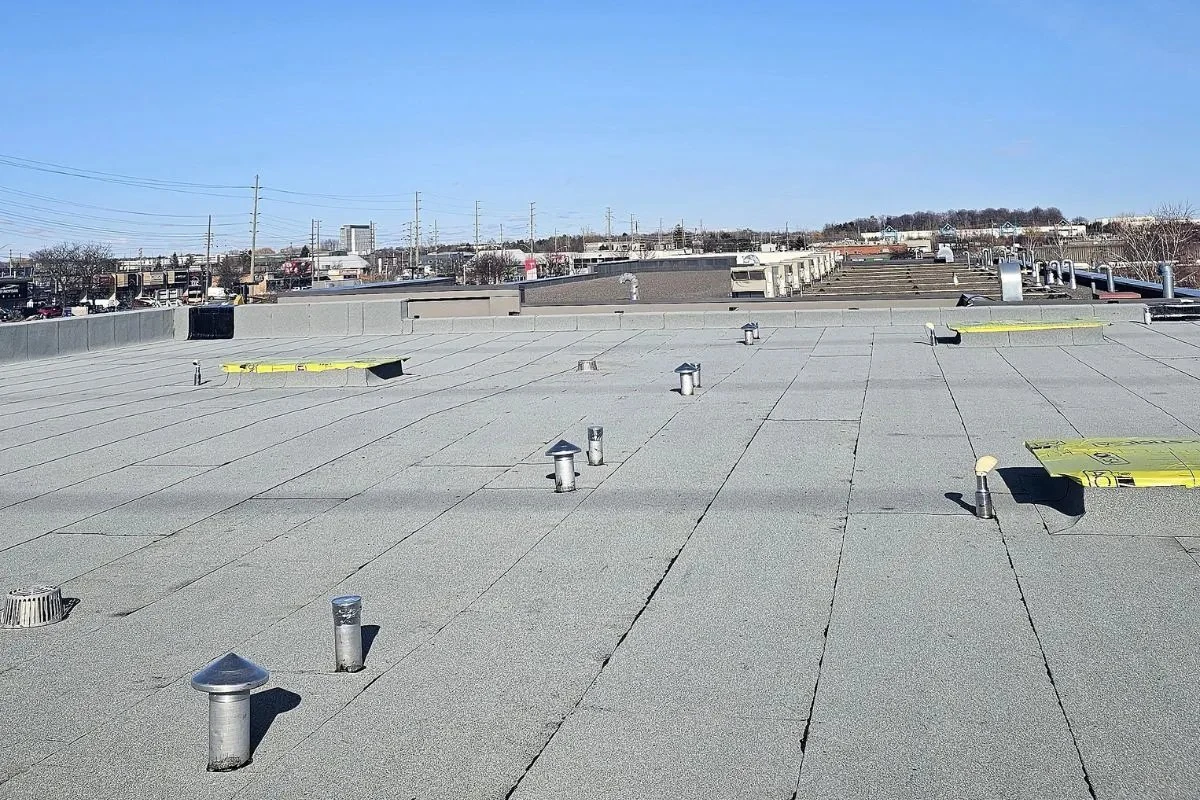
Black EPDM shows up most on older commercial buildings around Bend - light-industrial shells near the Highway 97 corridor, warehouse space that predates the single-ply boom, and a handful of buildings we've recovered rather than replaced because the rubber sheet underneath was still sound. It's a proven system, but the high-desert climate here puts a specific set of stresses on it that a lower-elevation spec sheet doesn't account for.
Where We Still See Black EPDM Specified
Rubber roofing has a long track record on straightforward low-slope buildings with minimal rooftop traffic, and we still spec it new on some projects - usually buildings where the owner values EPDM's simple ballasted or mechanically fastened install, or where a recover over existing rubber makes more sense than a full tear-off. It's a reasonable fit for shaded roofs or buildings tucked among ponderosa pines where the dark surface isn't taking the full brunt of summer sun all day.
Where we steer owners away from it is large, fully exposed low-slope roofs with no shade relief through a Bend summer. That's where the membrane's dark color starts working against it rather than for it.
Thermal Movement Across a High-Desert Day
Central Oregon's daily temperature swing is one of the more punishing things a roof membrane deals with here - summer days can run well into the 90s while the same night drops forty or more degrees before sunrise. Black EPDM absorbs heat efficiently, which means it also expands and contracts through a wider daily range than a reflective membrane would on the same roof.
That repeated expansion and contraction works on seams, flashing, and fastener penetrations over years faster than a steady climate would. We check lap seams and pipe boot flashing closely on older black EPDM roofs during inspections, because that's usually where fatigue shows up first - not in the middle of the field, but at the transitions.
Winter Snowmelt Behavior on Dark Membrane
One place black EPDM has a real advantage here is winter snow shedding. A dark membrane absorbs enough solar heat on a clear Central Oregon winter day to melt accumulated snow faster than a white membrane would, which can reduce sustained snow load on a roof that isn't otherwise built for heavy accumulation.
That advantage comes with a tradeoff, though - faster daytime melt followed by overnight refreeze means more freeze-thaw cycling at drains, scuppers, and roof edges than a roof that holds its snow cover longer. We watch ice buildup at drain bowls closely on black EPDM roofs through a Bend winter for exactly that reason.
UV and Ozone Exposure at Elevation
Bend sits at roughly 3,600 feet, and thinner air filters less ultraviolet radiation than a coastal or valley-floor installation sees. EPDM handles UV reasonably well as a material, but we've still pulled older black membrane off Bend roofs showing more surface cracking and seam degradation than we'd expect at the same age somewhere lower and cloudier.
That's part of why seam maintenance matters more here than a generic maintenance schedule would suggest. A lap seam that's starting to show separation on a black EPDM roof at elevation needs attention sooner than the same detail would at sea level.
Seam Maintenance on Older EPDM Roofs
Most EPDM failures we see in Bend trace back to seams, not the field membrane itself. Older adhesive-taped seams in particular can lose bond strength after years of thermal cycling, and once water gets under a lap seam it tends to travel before it shows up as an interior leak, which makes the actual entry point harder to pin down without a proper inspection.
A few things we check on every black EPDM inspection here:
- Lap seam adhesion and any visible separation or lifting
- Pipe boot and penetration flashing condition
- Drain bowl and scupper clearance ahead of winter
- Ballast displacement on loose-laid systems after high-wind events
- Fastener plate corrosion on mechanically attached systems
- Surface cracking or chalking on sun-exposed field areas
Recover Versus Replacement on Black EPDM Roofs
When the rubber field membrane itself is still flexible and the deck underneath is dry, a targeted seam repair and recoat can extend a black EPDM roof's service life without a full tear-off. We confirm that with core cuts rather than assuming - a membrane that looks fine on the surface can be sitting over wet insulation that's already compromised.
If the deck is dry and sound but the membrane itself is aging out, a recover with a new single-ply system is often the better long-term move than repeatedly patching an EPDM roof that's past its practical seam-repair window.
Questions About Black EPDM in Bend
Is black EPDM still a good choice for a new roof in Bend?
It depends on the roof. Shaded or partially shaded buildings, or roofs where a recover over existing rubber makes sense, are reasonable candidates. Large, fully sun-exposed low-slope roofs usually do better with a reflective membrane given our UV exposure.
Does black EPDM really degrade faster than lighter membranes here?
The material itself handles UV well, but the combination of high-elevation sun exposure and wide daily temperature swings accelerates seam and surface fatigue compared to what we'd expect at a lower, cloudier location.
Does black membrane help with snow load?
It can help shed accumulated snow faster on clear winter days because it absorbs more solar heat than a white membrane. The tradeoff is more freeze-thaw cycling at drains and edges from that faster melt-refreeze pattern.
How do you know if an EPDM roof needs seam repair versus full replacement?
We check seam adhesion, flashing condition, and deck moisture with core cuts. If the field membrane is flexible and the deck is dry, targeted seam repair can extend the roof's life. Wet insulation or brittle membrane usually means it's time to plan a replacement.
Can black EPDM be recovered with a different membrane later?
Often yes, if the existing EPDM and deck are dry and structurally sound and code allows the added layer within the building's load limits. We verify that with core cuts before recommending a recover over a tear-off.
Related
Ready to review the roof scope?
Request a Roof Assessment