PVC Roofing in Bend, OR
PVC single-ply roofing for Bend, OR breweries, restaurants, and medical buildings. Chemical-resistant membrane built for rooftop exhaust and grease.
PVC Roofing for Brewery Exhaust and Kitchen Grease Around Bend
Bend has more breweries and restaurant kitchens per block than most cities its size, and that concentration of rooftop grease, steam, and exhaust is exactly the environment PVC membrane was built to handle. We spec PVC on buildings where standard single-ply would degrade faster than it should, because of what's venting onto the roof surface as much as what's falling on it from the sky.
Why Chemical Resistance Matters Here
Grease-laden exhaust from a commercial kitchen or a brewhouse can break down the plasticizers in some membranes over time, leaving them brittle and prone to cracking years before they should fail. PVC's chemistry resists that kind of degradation far better than TPO or EPDM, which is why we point breweries and restaurant buildings toward it even though it typically costs more per square than the alternatives. We've replaced enough prematurely failed roofs on kitchen-heavy buildings to know the extra upfront cost usually pencils out over the life of the roof, especially once an owner factors in the disruption of an early tear-off on a building that's supposed to be operating every night.
That same chemical resistance helps around rooftop CO2 systems and fermentation venting common in brewery production spaces, where lesser membranes can show localized softening or discoloration near vent points within a few years. We've walked brewery roofs in the industrial pockets near the airport corridor where a cheaper membrane installed a few years earlier had already gone soft and tacky directly downwind of the exhaust stack, while the surrounding field of the same roof still looked new.
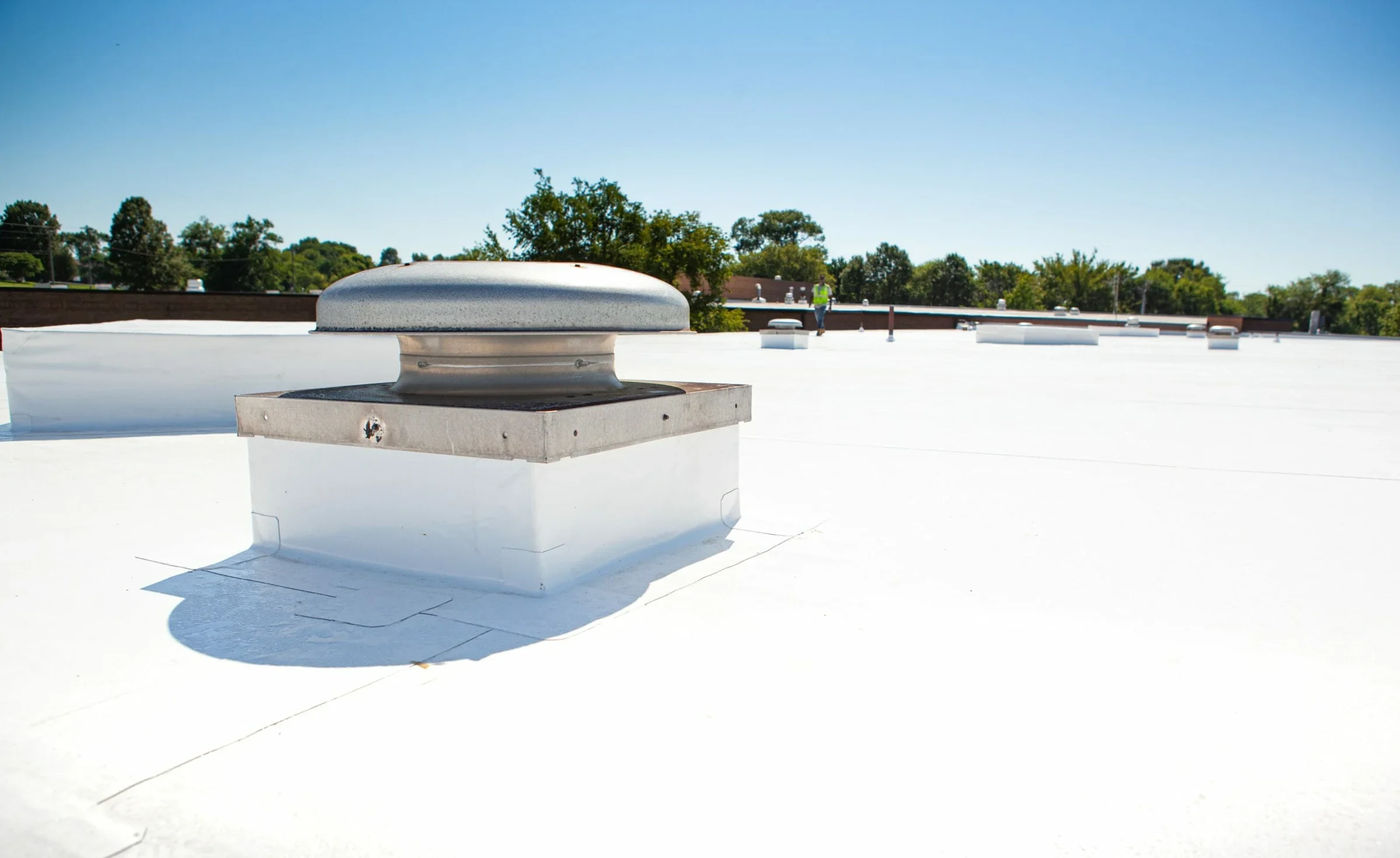
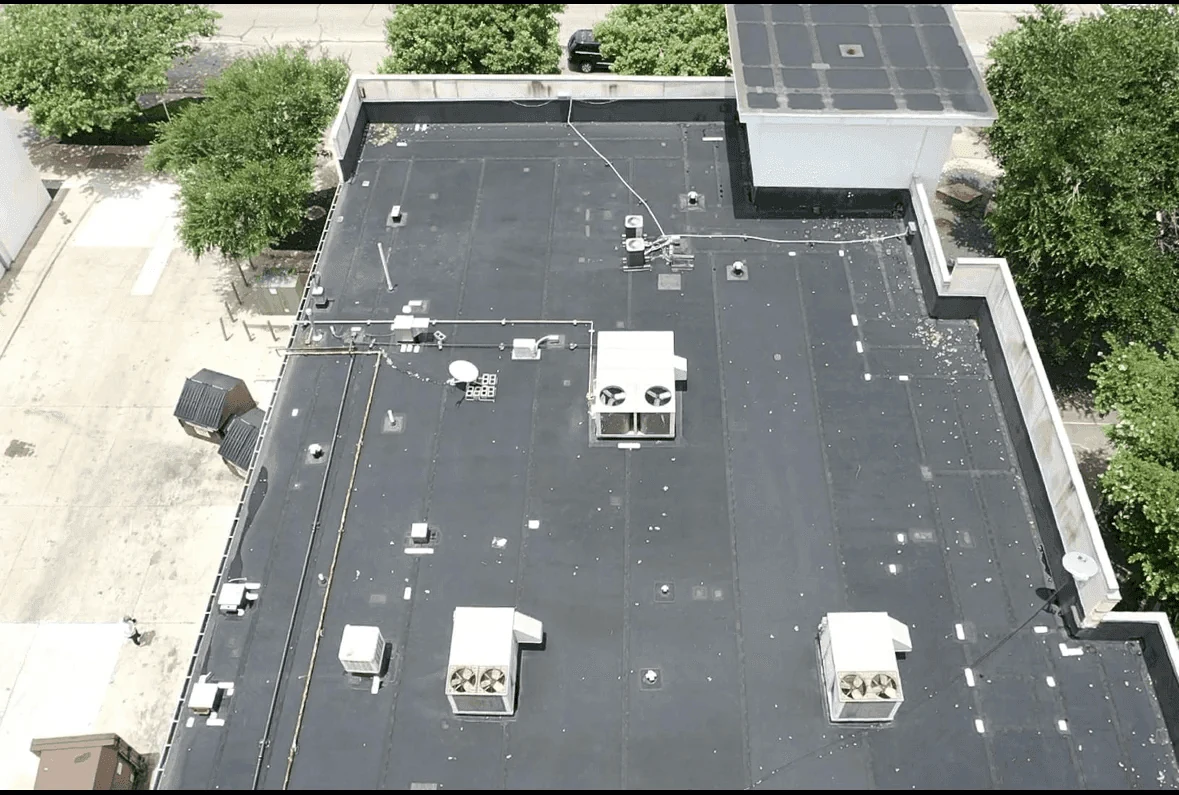
Restaurant rooftops downtown and in the Old Mill District present a similar pattern on a smaller scale. A standalone kitchen exhaust fan running through dinner service every night puts a steady, concentrated dose of grease-laden air onto a fairly small patch of roof, and that's usually the first place any membrane other than PVC starts to show wear.
Hot-Air Welded Seams Under Freeze-Thaw
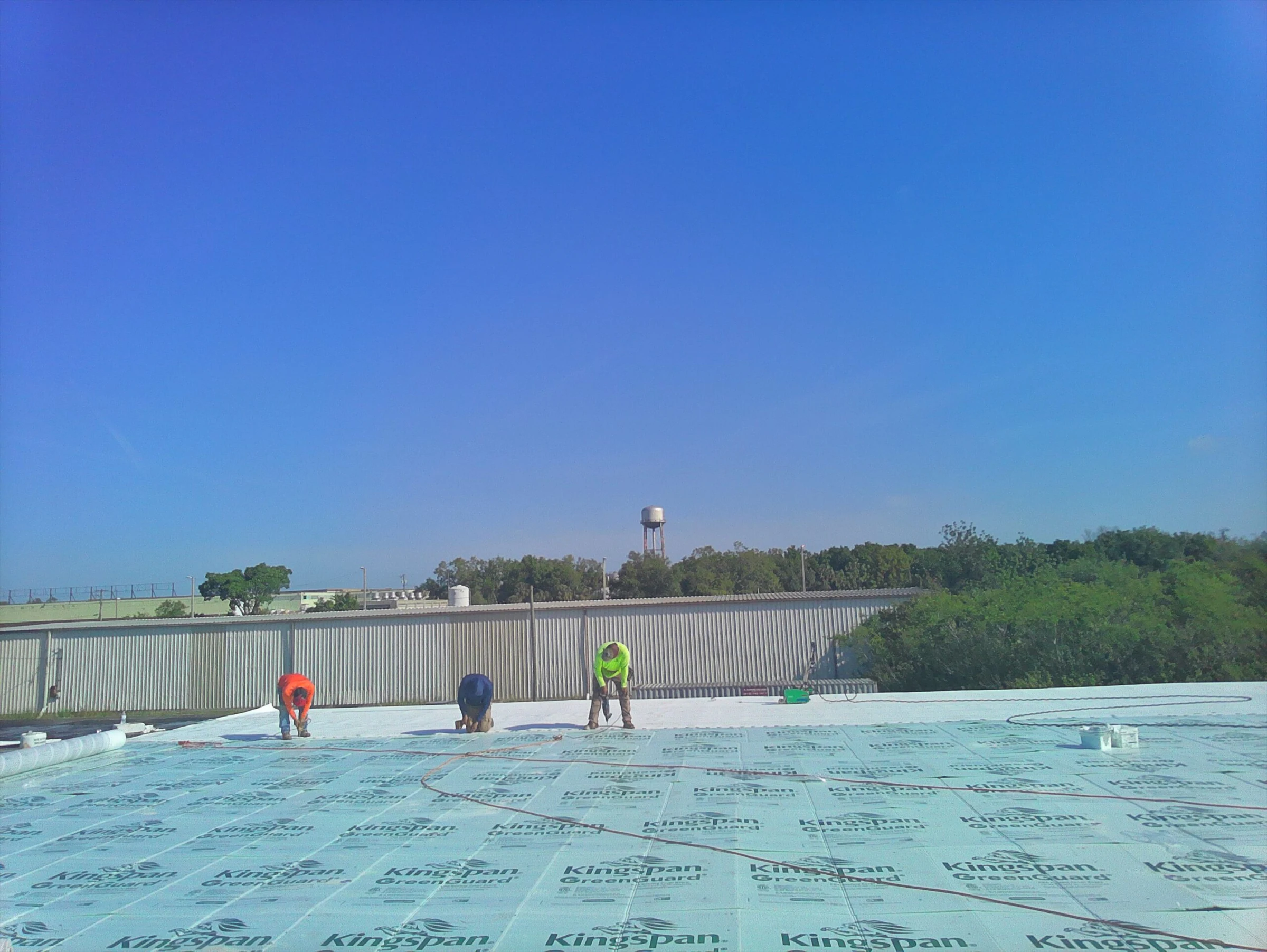
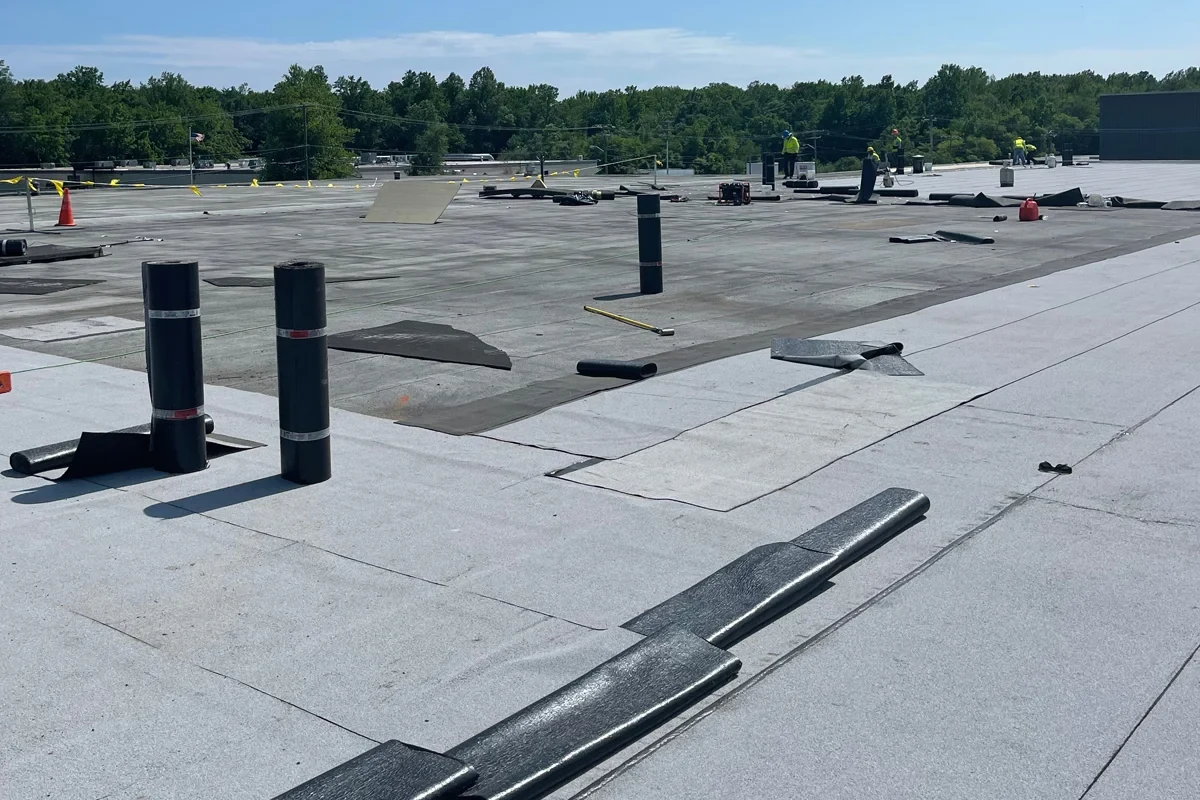
Like TPO, PVC seams are heat-welded into a continuous sheet rather than taped, which holds up well against Bend's freeze-thaw cycling through the winter months. We've found PVC seams particularly resistant to the kind of lap-edge lifting we see on older taped membranes after a decade of hard freezes followed by rapid thaws. Weld quality still depends entirely on installer skill and the right equipment settings for our temperature range, so we test seam strength on every job rather than trusting a visual pass, pulling a probe test at random points along each day's completed welds before moving on.
Reflectivity and High-Desert Sun
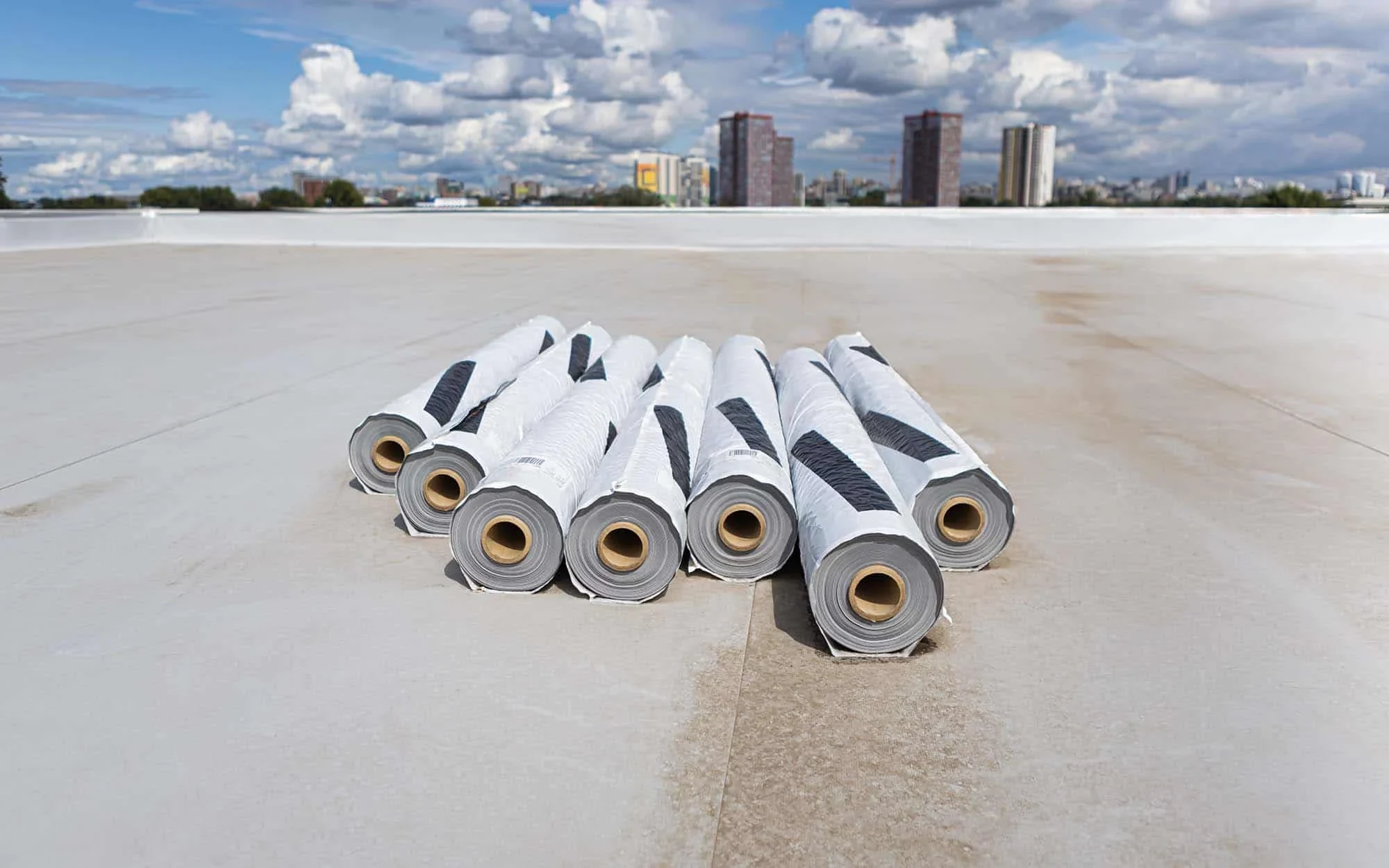
PVC's light-colored surface reflects a meaningful share of the intense UV load Bend's elevation delivers, similar to TPO, which keeps rooftop surface temperatures down and slows the aging that eventually stiffens and cracks a membrane. On buildings running rooftop mechanical equipment around the clock, hotels especially, that lower surface temperature translates into a measurable difference in cooling load.
Where We Install It Most
Beyond breweries and restaurants, we specify PVC on medical buildings tied to the region's growing health systems, where rooftop exhaust from labs and sterilization equipment demands the same chemical resistance kitchens do. It also shows up on some industrial buildings near the airport corridor handling manufacturing processes with rooftop venting. For a standard office or retail building with no unusual exhaust, we're more often steering owners toward TPO to control cost, since PVC's chemical resistance advantage matters less when there's nothing corrosive hitting the roof.
We've also had property managers ask for PVC on mixed-use buildings where a ground-floor restaurant vents onto a shared roof deck that also covers office or residential space above. In that layout, isolating the exhaust-exposed section with PVC while running a more standard membrane elsewhere on the same roof can be the more practical, cost-controlled approach.
What We Evaluate Before Recommending PVC
- Type and volume of rooftop exhaust, including grease, steam, or chemical venting
- Existing membrane condition and cause of any current degradation
- Roof slope and drainage capacity for Central Oregon snowmelt
- Rooftop equipment layout and penetration density around exhaust points
- Budget comparison against TPO for buildings without heavy chemical exposure
- Structural capacity for the insulation and cover board package under PVC
Questions About PVC on Bend Buildings
Is PVC worth the extra cost over TPO for a typical building?
Not always. If there's no grease, steam, or chemical exposure hitting the roof, TPO usually performs just as well for less money. We only push PVC where the exhaust profile justifies it.
How does PVC hold up against Bend's snow load?
The membrane itself isn't the limiting factor, the deck and structure are. We size drainage and confirm structural capacity the same way we would for any single-ply system.
Can PVC be installed over an existing brewery roof without shutting down production?
Often yes, with a recover approach, though we coordinate timing carefully around brewhouse exhaust and rooftop access needs so production isn't interrupted more than necessary.
Does PVC really resist grease better than TPO in practice?
We've seen it firsthand on side-by-side buildings, where a TPO roof near kitchen exhaust showed softening and discoloration within a few years while a PVC roof in a similar spot held up cleanly.
What's the seam weld quality issue you watch for most on PVC?
Under-welded seams from crews using settings tuned for warmer climates. We verify weld strength on every job because a cosmetically fine-looking seam can still fail under our freeze-thaw cycling if the weld temperature wasn't right.
Related
Ready to review the roof scope?
Request a Roof Assessment