Holcim Elevate Roofing Systems in Bend, OR
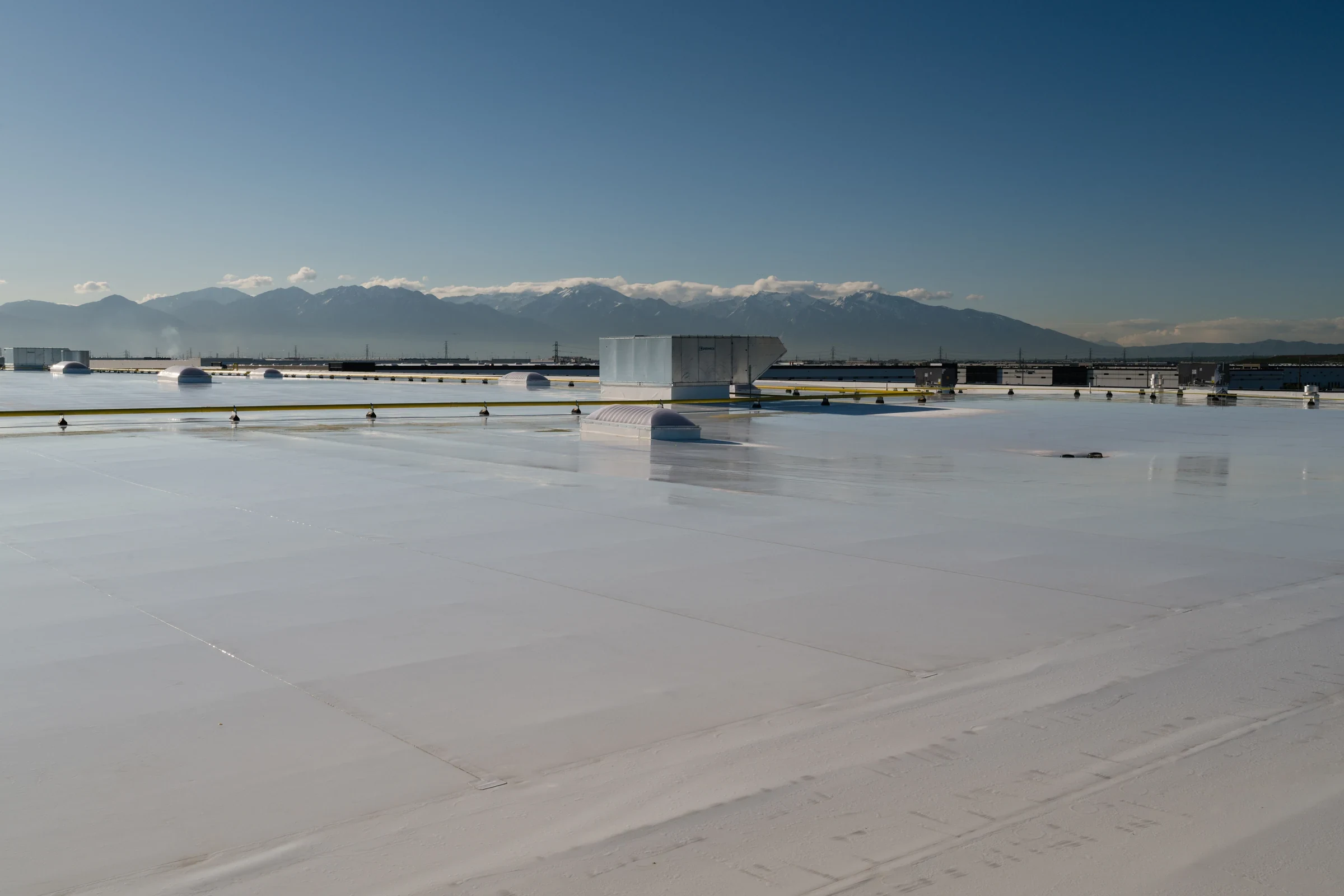
Holcim Elevate UltraPly TPO and RubberGard EPDM roofing installed on Bend commercial buildings, specified for high-desert sun and Cascade snow load.
Holcim Elevate Systems on Bend Commercial Roofs
Holcim Elevate, the roofing division built on the former Firestone Building Products portfolio, gives us access to UltraPly TPO and RubberGard EPDM membrane lines when a Bend project's structural or climate needs point toward that manufacturer. We spec across several manufacturers depending on what a given roof requires, and Elevate's product range covers a good share of what we run into here.
UltraPly TPO on High-UV, Sun-Exposed Roofs
Elevate's UltraPly TPO line includes standard and reinforced membrane options, which matters when we're specifying for Bend's elevation. At roughly 3,600 feet, thinner air filters less ultraviolet radiation than a coastal or valley-floor installation deals with, and we lean toward the heavier, reinforced options in that line on fully sun-exposed south- and west-facing roof slopes where UV load is highest through our long dry summer.
Seam welding on UltraPly follows the same cold-weather protocol we use across TPO systems here - going by membrane surface temperature rather than air temperature, with peel testing on the day's first welds before continuing through a full run.
RubberGard EPDM for Cold-Flexibility and Recover Work
Elevate's RubberGard EPDM line comes up most on recover projects over existing rubber roofing, or where an owner specifically wants EPDM's low-temperature flexibility for a building that sees hard overnight freezes through a Central Oregon winter. RubberGard is available in both black and white finishes, which lets us match the roof to the building's sun exposure and the owner's priority between winter snowmelt behavior and summer cooling load.
We check lap seam adhesion closely on RubberGard installs given how much our daily temperature swing stresses seams over the roof's service life - hot summer afternoons followed by nights that can drop forty degrees or more before sunrise.
Fastening and Attachment for Cascade-Region Wind and Snow
Wind uplift performance on any Elevate system depends on fastening density, cover board selection, and deck attachment matched to the specific roof's exposure category, not a generic pattern applied across every job. Parapet height and surrounding structures change a building's actual exposure rating even between roofs a short distance apart, so we calculate uplift zones specific to each project.
Drain and scupper sizing gets reviewed alongside membrane selection on Elevate installs here too, since Central Oregon's spring snowmelt sends a lot of water across a low-slope roof in a short window, and drainage capacity matters as much as membrane performance in avoiding sustained ponding.
Elevate also publishes cover board and insulation compatibility charts alongside its membrane specs, and we cross-check those against whatever insulation is already on a roof during a recover project. A cover board mismatch between the existing substrate and a new top membrane can compromise both wind uplift performance and warranty eligibility, so that review happens before any tear-off begins, not after.
Warranty Documentation and Local Installation Standards
Warranty terms on Elevate systems, like other major manufacturers, depend on installation matching their published assembly requirements. We follow that documentation closely and keep fastening patterns, seam testing results, and installation photos on file as part of the warranty registration process.
On top of that baseline, we apply the same conservative judgment we use across manufacturers here - tighter seam overlap and fastening on sun-exposed roofs, closer drain sizing review ahead of snowmelt season, and cold-weather welding protocols that account for Bend's elevation rather than assuming a spec written for a lower, cloudier market applies as-is.
Choosing Between Elevate Product Lines
- Whether the roof is new construction or a recover over existing membrane
- Sun exposure and whether reflectivity or cold-weather flexibility matters more
- Rooftop traffic frequency and whether reinforced membrane is warranted
- Deck type and compatibility with mechanically fastened versus fully adhered systems
- Manufacturer wind uplift rating requirements for the building's exposure category
- Owner budget and warranty term preferences
Installation Records We Maintain
Every Elevate installation we complete gets documented - fastening patterns, seam weld testing, flashing detail photos, and any project-specific deviations from standard spec made to address a particular roof condition. That record supports the manufacturer's warranty process and gives the owner a reference for future maintenance or a later recover decision.
We also note drain sizing, insulation R-value, and any tapered fill installed as part of the project, since that information matters for anyone evaluating the roof's condition years down the line.
Questions About Holcim Elevate Roofing in Bend
Is Holcim Elevate the same company as Firestone Roofing?
Holcim Elevate is the roofing division built on the former Firestone Building Products commercial roofing portfolio, including the UltraPly TPO and RubberGard EPDM product lines.
Which Elevate system fits a high-UV Bend roof best?
It depends on roof use. UltraPly TPO in a reinforced thickness suits most sun-exposed low-slope roofs, while RubberGard EPDM fits recover projects or buildings prioritizing cold-weather flexibility.
Does RubberGard EPDM come in a reflective white option?
Yes, RubberGard is available in both black and white finishes, letting us match reflectivity or heat-absorption characteristics to the roof's sun exposure and the owner's priorities.
What affects warranty length on an Elevate system?
Warranty length depends on the specific product, membrane thickness, and installation meeting Elevate's published assembly requirements. We confirm current terms against manufacturer documentation before finalizing a project.
Can Elevate membrane be used as a recover over an existing roof?
Often yes, if the existing deck and insulation are dry and structurally sound and code allows the added layer. We confirm that with core cuts before recommending a recover over a tear-off.
Related
Ready to review the roof scope?
Request a Roof Assessment