Commercial Reroofing in Bend, OR
Full commercial reroofing for Bend and Central Oregon, built to carry Cascade snow loads and hold up under high-desert UV, freeze-thaw, and fire season.
Reroofing Commercial Buildings Across Bend and Central Oregon
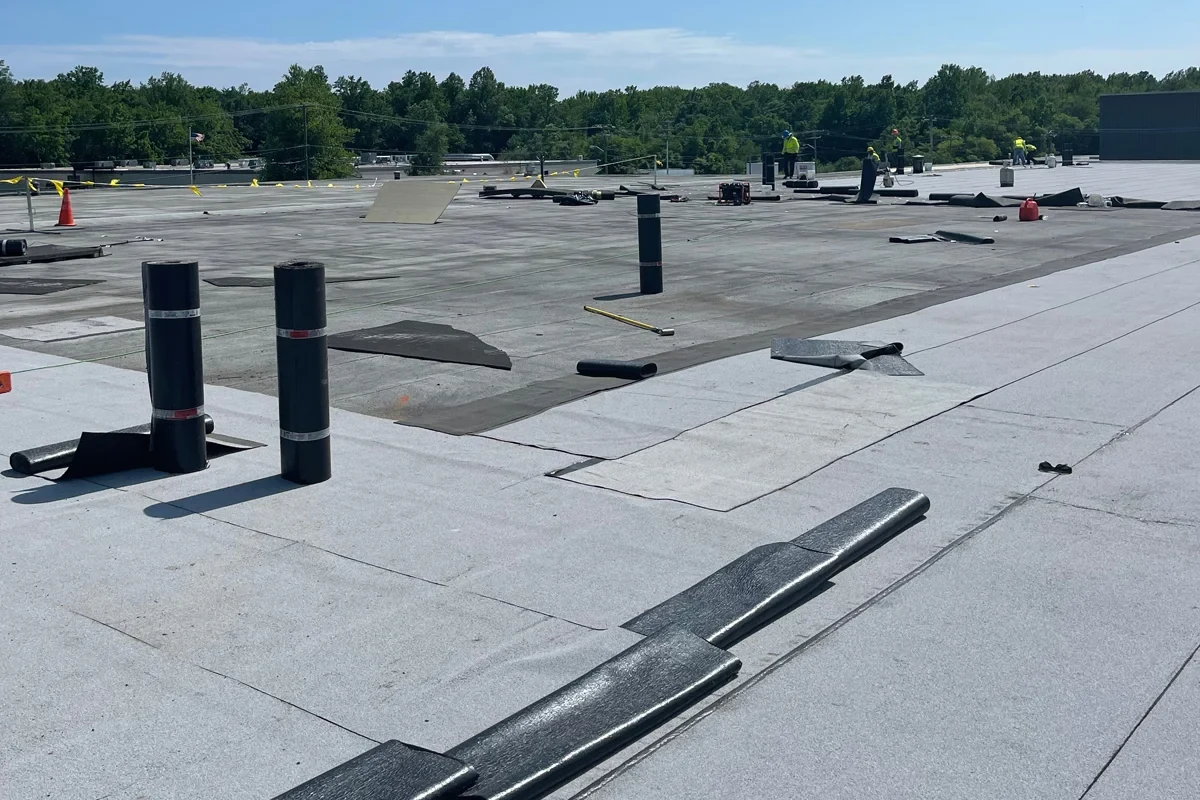
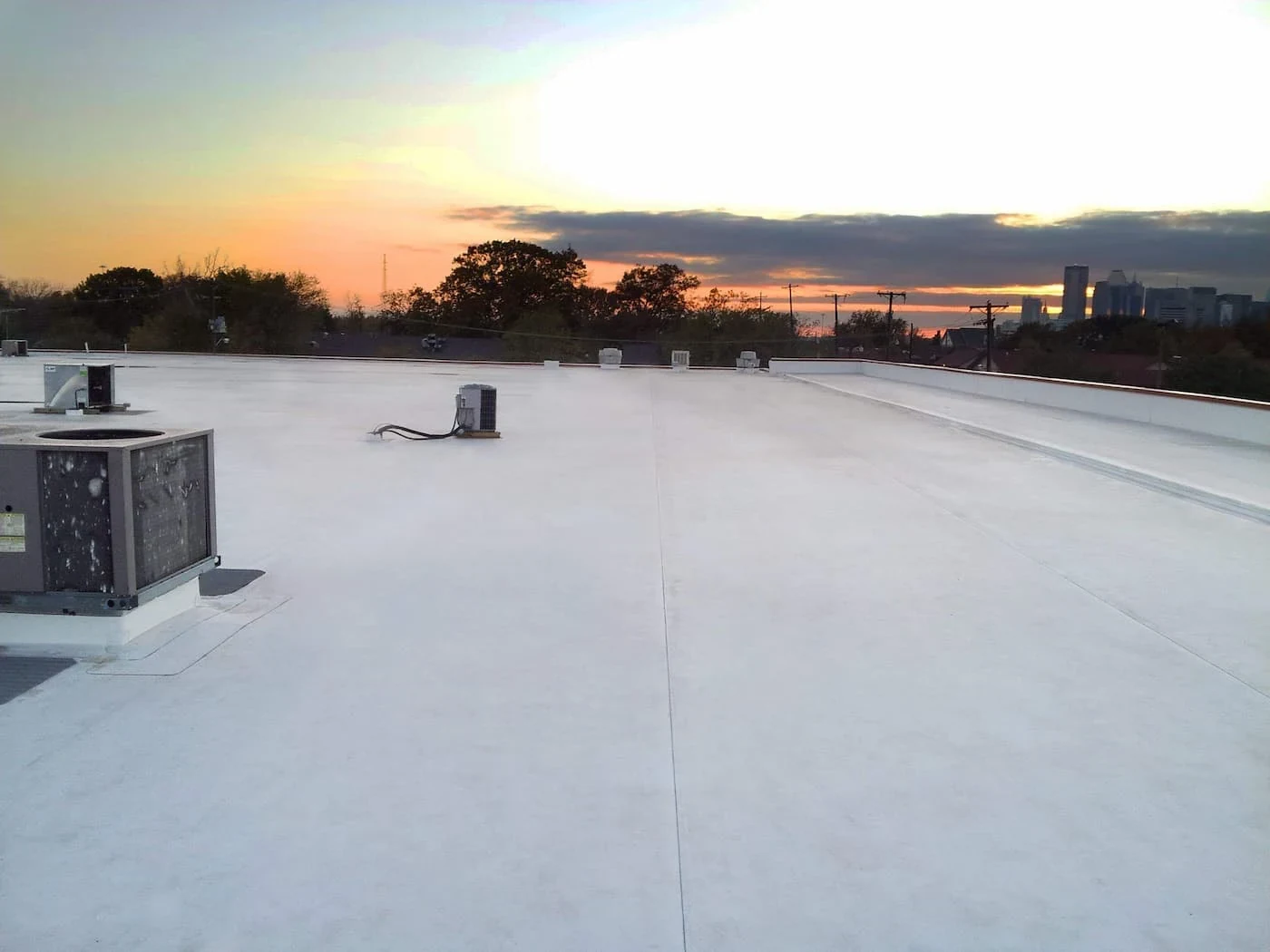
When a commercial roof in Bend hits the end of its service life, we start with the same question every time: recover or full tear-off. High-desert sun and heavy Cascade snow don't leave much room for guessing, and getting that call wrong means an owner is paying for a second roof inside ten years instead of twenty.
Recover or Full Tear-Off - How We Make the Call
A recover only works if the existing deck and insulation are dry and sound, and code allows another layer without exceeding the roof's design load. On buildings we've walked around Juniper Ridge and the industrial park off Highway 97, that's the exception more than the rule - freeze-thaw cycling works water into fastener penetrations and lap seams over the years, and by the time an owner calls us the insulation underneath is often saturated.
Wet insulation doesn't dry out on its own at this elevation. It holds moisture through the winter, freezes, expands, and pushes the membrane above it out of plane. Once we find that during core cuts, recover is off the table and we're pricing a tear-off.
Snow Load Is the First Number We Check
Bend sits at roughly 3,600 feet, and the roof structure has to carry real snow, not the light dustings you'd design for closer to the valley floor. Before we spec a new system we confirm the structural deck and framing were built for the ground and roof snow loads Deschutes County requires, especially on older pre-engineered metal buildings out toward Redmond and Prineville that may have been built to an older code cycle.
We also check purlin spacing and look for any rust or deflection at the eaves from years of drift loading against parapets. A new membrane doesn't fix a structural shortfall, and we'd rather flag that before the tear-off starts than after.
UV at 3,600 Feet Doesn't Play by Sea-Level Rules
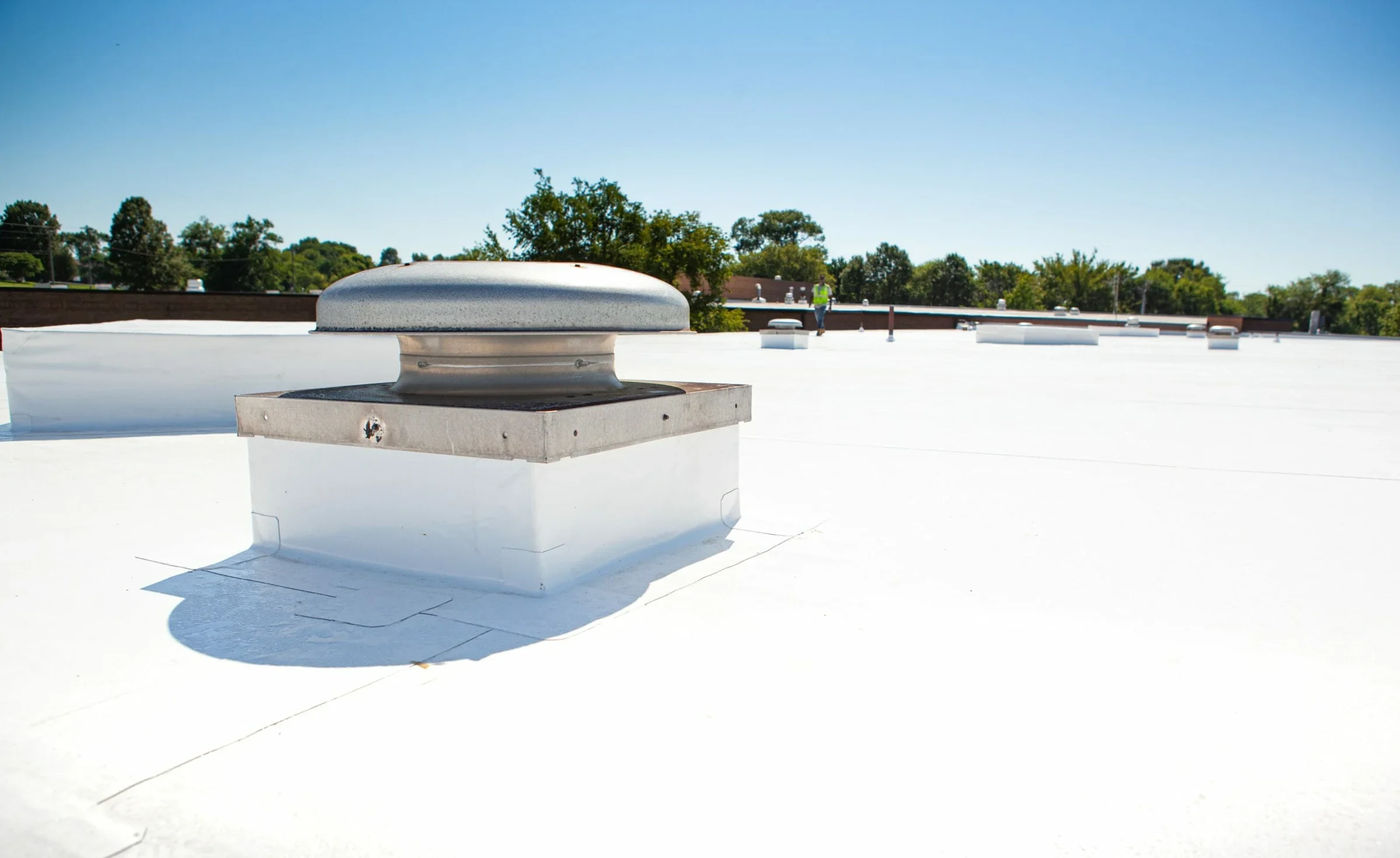
Thinner air means less atmosphere filtering the sun, and membranes here take a harder UV beating than the manufacturer's warranty literature assumes for a coastal or Midwest installation. We've pulled white TPO off Bend roofs at year twelve that's chalking and going brittle at the seams the way you'd expect at year eighteen somewhere lower and cloudier.
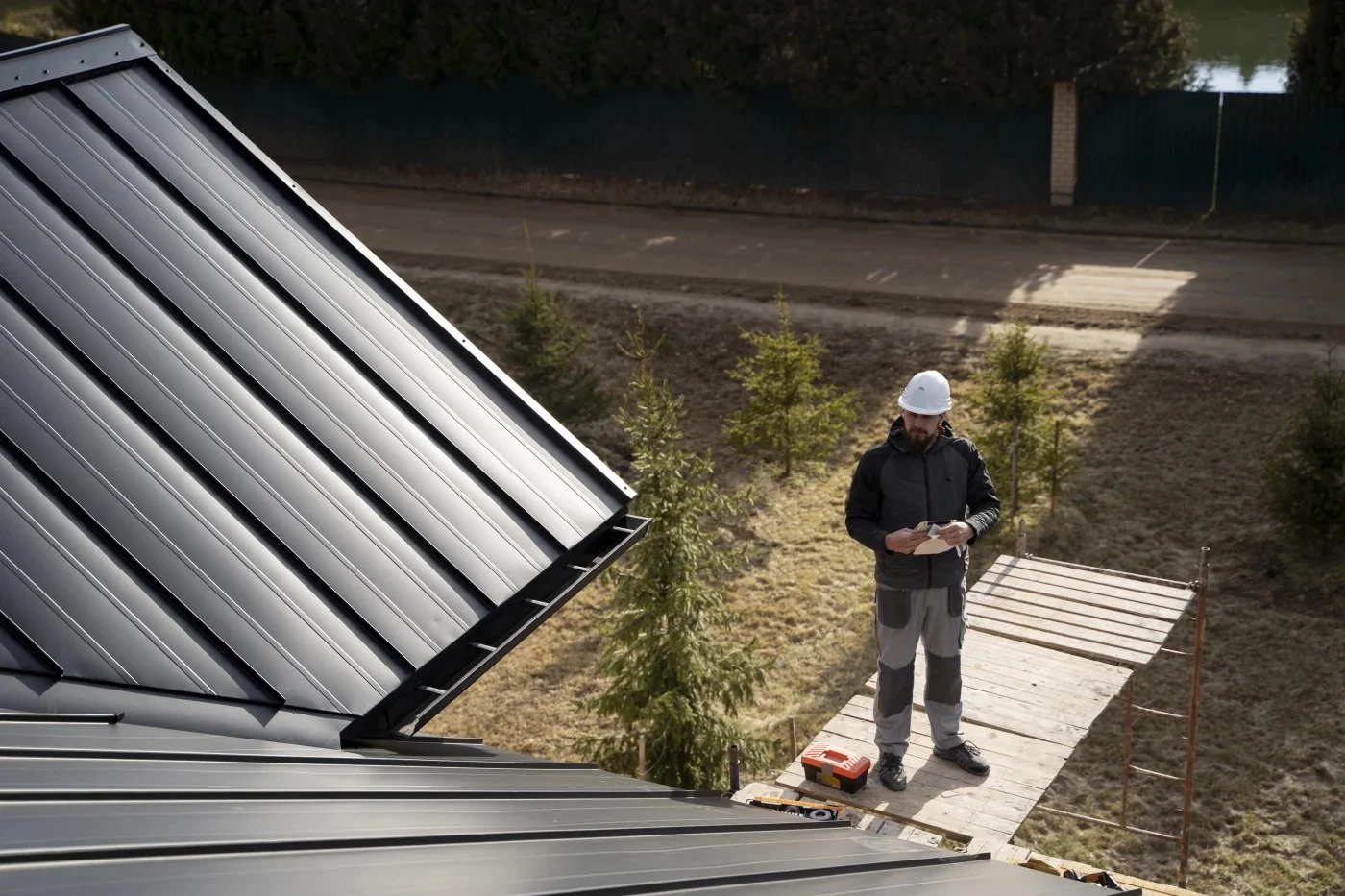
That changes how we spec thickness and fastening pattern. On sun-exposed low-slope roofs we lean toward heavier membrane gauges and mechanically fastened systems we can inspect and re-seat seams on without tearing the whole field apart.
Working Around a Short Build Season
Bend's dependable roofing window runs roughly May through early October before hard overnight freezes start affecting adhesive cure and membrane flexibility. For hotels along the Old Mill District or breweries that can't shut taproom operations, we phase tear-off in sections and dry each section in before moving to the next, so the building is never fully exposed overnight.
We schedule the heaviest tear-off work for early morning when temperatures are stable, and we track the extended forecast daily once a roof is opened up - an unexpected September cold snap can end a workday early if it puts membrane adhesion at risk.
What Goes Back Under the New Membrane
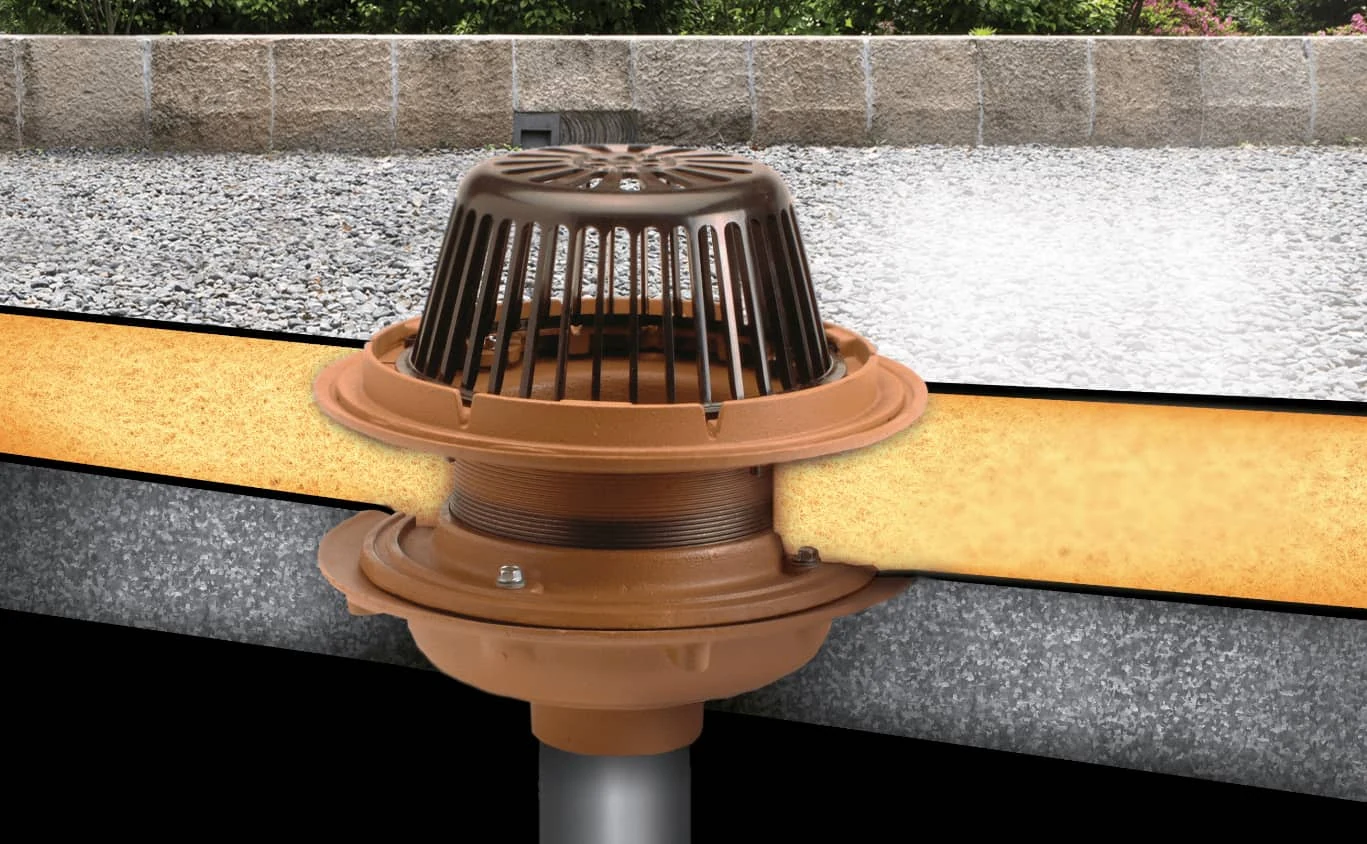
A reroof is also our best chance to fix drainage before it's covered up again. We look at tapered insulation layouts that clear standing water toward drains instead of letting it pond and freeze against the membrane through the winter.
- Deck inspection and repair or replacement of any deteriorated panels
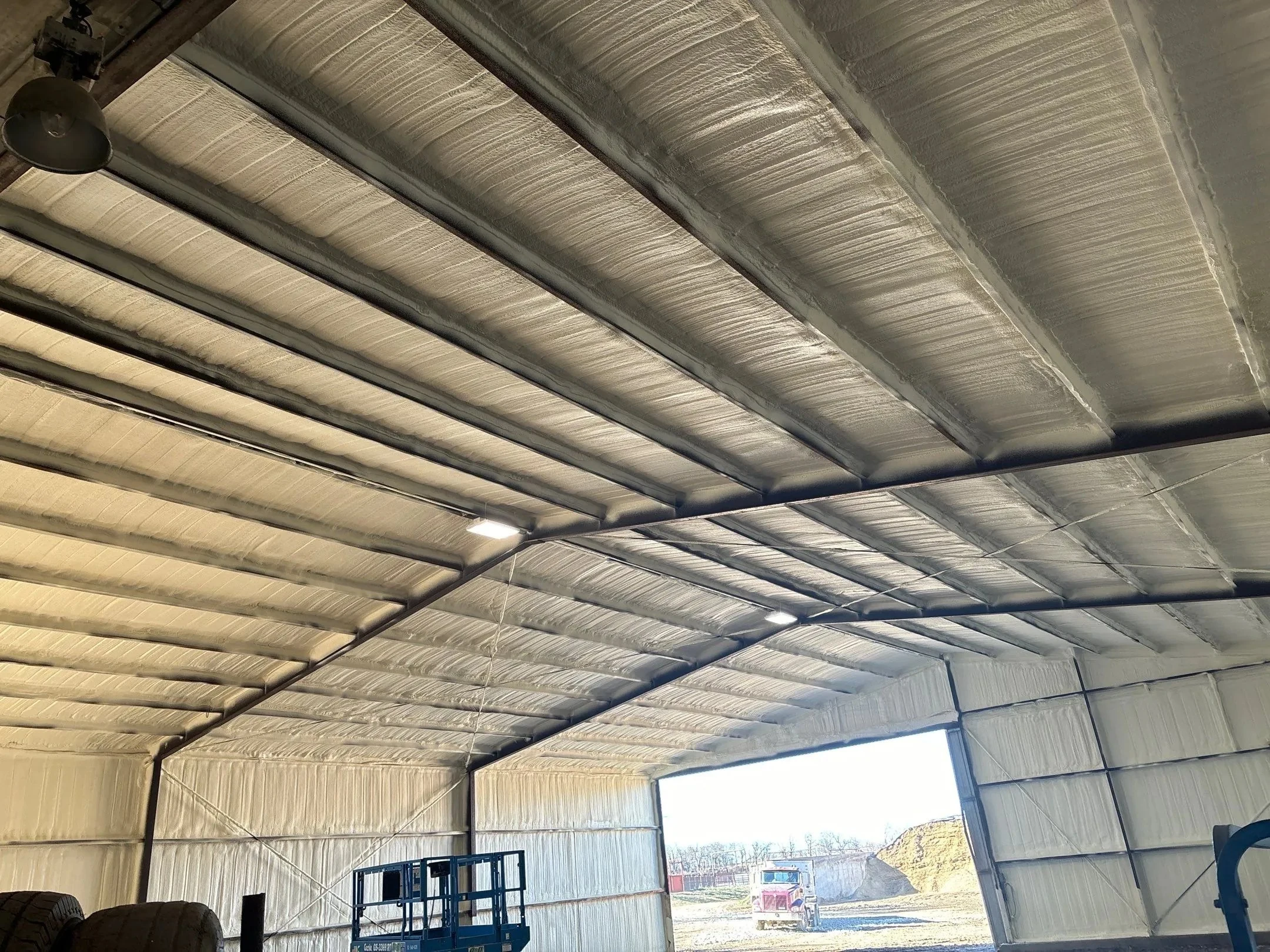
- New insulation sized to current energy code, dry and rated for the assembly
- Tapered insulation or crickets built into low spots and behind curbs
- Reinforced walkway pads at rooftop unit service paths
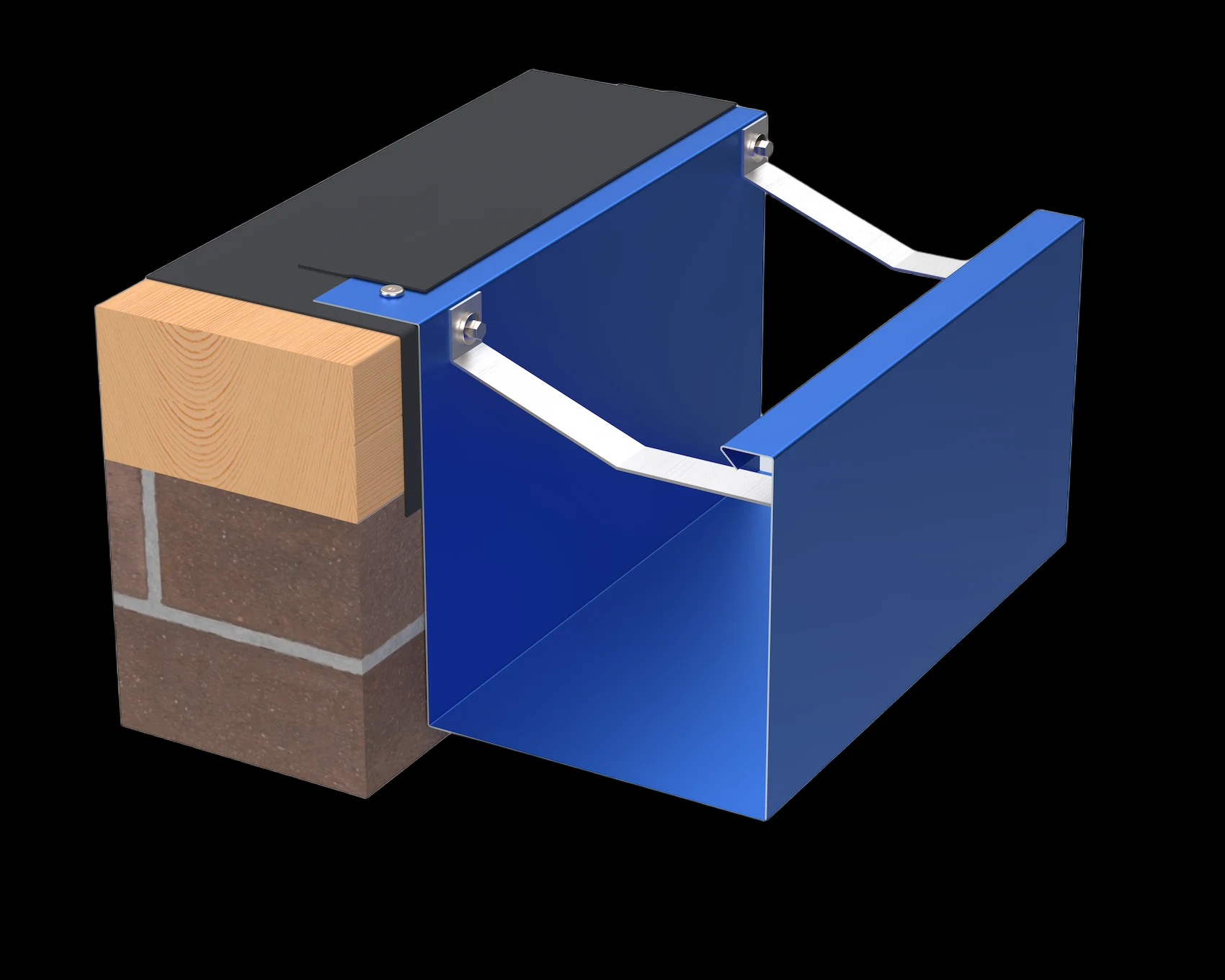
- New edge metal and coping matched to current wind uplift requirements
- Manufacturer warranty inspection and sign-off before final payment
Wildfire Season and the New Roof Assembly
Central Oregon's fire season runs through the smoky stretch of July into September, and a low-slope commercial roof collects pine needle and juniper debris in every parapet corner and rooftop unit curb whether the building is near the forest edge or sitting in an industrial park in town. That debris is fuel if an ember lands on it during a red flag wind event.
We build new roofs with Class A fire-rated assemblies and we talk owners through keeping curbs, gutters, and parapet corners clear as part of routine upkeep, because the roof assembly can only do so much if debris is allowed to pile up on top of it.
Questions We Get About Bend Reroofing Projects
How do you decide between a recover and a full tear-off?
It comes down to what we find in core cuts - dry, sound insulation and a deck within load limits can support a recover. Wet insulation or code load limits reached means tear-off.
How much snow load does a Bend commercial roof need to carry?
It depends on the building's design and Deschutes County's current snow load requirements for its location and elevation, which we confirm against the structural drawings before specifying any new system.
Does elevation really shorten membrane life here?
We see it consistently. UV exposure at 3,600 feet accelerates chalking and seam embrittlement compared to what manufacturer literature assumes for lower, cloudier climates, which is why we spec accordingly.
Can a reroof happen while our business stays open?
Usually yes. We phase the tear-off and dry-in section by section so the building is never left exposed overnight, which is standard practice for the hotels and breweries we've worked on in the Old Mill District.
How long does a typical commercial reroof take in Bend?
A mid-size flat roof usually runs one to three weeks depending on square footage, tear-off scope, and how much of that short May-to-October window is left when we start.
Related
Ready to review the roof scope?
Request a Roof Assessment