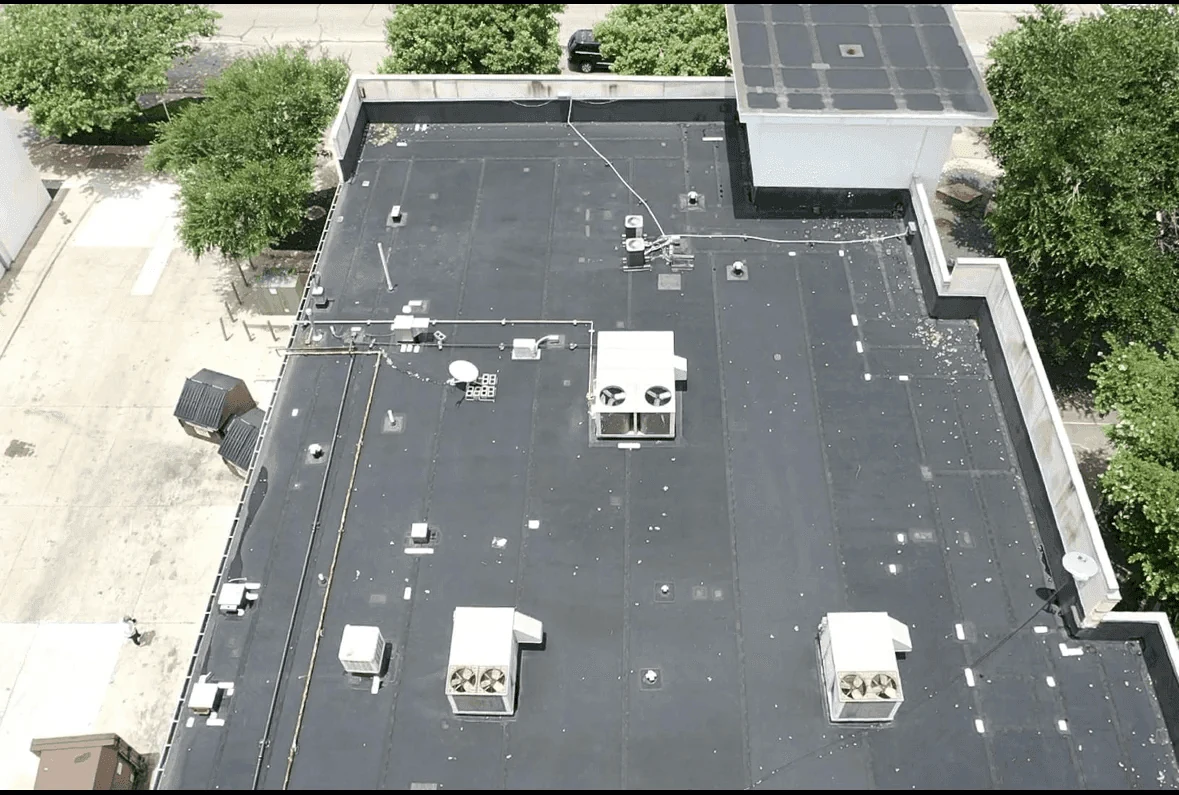
EPDM Commercial Roofing in Bend, OR
EPDM rubber roofing for Bend, OR commercial buildings. Seam maintenance and attachment methods matched to high-desert UV and winter freeze-thaw cycling.
What Twenty Winters Do to a Black EPDM Roof in Bend
Plenty of the commercial buildings we service around Bend were roofed with EPDM back before TPO became the default choice, and we still recommend it for specific situations today. Black rubber membrane has a track record here that goes back decades, and when it's maintained properly it can outlast the punishing thermal swings this climate throws at a roof. The catch is that EPDM's dark surface absorbs far more of the sun's energy than a reflective membrane does, and at this elevation that difference adds up fast.
Heat Absorption at 3,600 Feet
A black EPDM surface can run considerably hotter than the surrounding air on a clear Central Oregon afternoon, sometimes 50 degrees or more above ambient. That heat load speeds up membrane aging, and we see it most clearly on roofs installed twenty-plus years ago that are now showing surface cracking, shrinkage at the perimeter, and seam tape that's dried out and lost its bond. None of that means EPDM is a bad choice here, it means the maintenance schedule has to account for that accelerated aging curve rather than assuming a rubber roof just quietly lasts forever.
We still install EPDM on buildings where owners want the membrane's flexibility and puncture resistance, particularly on roofs with a lot of rooftop equipment or foot traffic, since rubber tolerates abuse better than some thinner single-ply options.
Seam Tape Is the Weak Point Here
Unlike heat-welded TPO or PVC, EPDM seams rely on adhesive tape, and that tape is exactly what struggles most under our freeze-thaw cycling. Cold contraction pulls at the seam edge, and repeated cycling through the winter months works the bond loose over time. We've opened up plenty of failed EPDM seams on inspections where the membrane itself was still in decent shape but the tape had simply given up after a decade or two of Bend winters. Reinforced seam tape and careful attention to primer application during installation make a measurable difference in how long that bond holds.
Ballasted, Mechanically Attached, or Fully Adhered
The attachment method matters as much as the membrane choice on an EPDM roof here. Ballasted systems using river rock work fine on structurally sound roofs, but we check that the deck can actually carry that additional dead weight on top of Central Oregon's snow load before recommending it, since the two loads stack. Mechanically attached and fully adhered systems avoid that added weight and are usually our preference on buildings where the structural engineer's snow load numbers are already tight.
We've also seen ballasted roofs where loose stone migrated toward drains and scuppers after years of wind and snowmelt, clogging drainage right when a roof needs it most during spring thaw. Keeping ballast distribution even is a maintenance item owners often forget about.
Buildings Where EPDM Still Makes Sense
We still spec EPDM on warehouse and light-industrial buildings around the airport corridor and in Juniper Ridge, where the roof sees more foot traffic from maintenance crews and rooftop equipment installs than a typical office building. It's also a practical option on some of the older retail and institutional buildings downtown where a full tear-off to a different system isn't in the budget and the existing rubber membrane still has useful life left with proper seam maintenance.
Cost comes into it too. Bend's rapid growth has pushed construction and material pricing up across the board, and EPDM remains one of the more affordable single-ply options for owners who need to cover a large roof footprint without stretching the budget on a warehouse or distribution building that doesn't need a premium reflective membrane.
What We Look For on an EPDM Inspection
- Seam tape adhesion at every lap, checking for lifting edges or dried-out primer
- Membrane surface for shrinkage, cracking, or embrittlement, especially near parapets
- Ballast distribution and any migration toward drains or roof edges
- Flashing condition at curbs, penetrations, and perimeter termination bars
- Drain and scupper clearance after ballast or debris accumulation
- Signs of standing water that could accelerate seam tape failure
Questions Owners Ask About EPDM Here
Is black EPDM a poor choice given how much sun Bend gets?
It's not a poor choice, but it ages faster than reflective membranes under this much UV. We factor that into the maintenance schedule and are upfront when a building would benefit more from a reflective coating or a switch to TPO at replacement time.
Can ballasted EPDM handle our snow loads?
Only if the structure was designed to carry both the ballast weight and the snow load together. We verify that before recommending a ballasted system rather than assuming it.
How long does an EPDM roof typically last in this climate?
With good seam maintenance, fifteen to twenty-five years is realistic, though the dark membrane's UV exposure here tends to push toward the shorter end of that range compared to a milder climate.
Can a coating extend the life of an aging EPDM roof?
Often yes. A properly prepared and applied coating can reduce heat absorption and add years to a membrane that's structurally sound but showing UV wear, which is usually more cost-effective than a full tear-off.
What causes most of the EPDM leaks you repair around Bend?
Seam tape failure from years of freeze-thaw cycling, more often than a puncture or membrane defect. That's why our inspections focus heavily on seam condition rather than just scanning the field of the roof.
Related
Ready to review the roof scope?
Request a Roof Assessment