Commercial Roofing Contractors Sisters, OR
Commercial roofing contractors serving Sisters, OR with commercial roof repair, replacement, coatings, maintenance programs, inspections, and documented roof reports.
Commercial Roofers in Sisters, OR
A practical commercial roofing plan for Sisters, OR properties separates urgent leak control from repair, coating, maintenance, and replacement decisions supported by photos and condition findings. Sisters keeps a strict Western-town look on every downtown facade, but what's actually on the roof behind that false front varies as much as anywhere else in Central Oregon. We work this town knowing the street view rarely tells us what condition the membrane is really in.
The False-Front Retail District
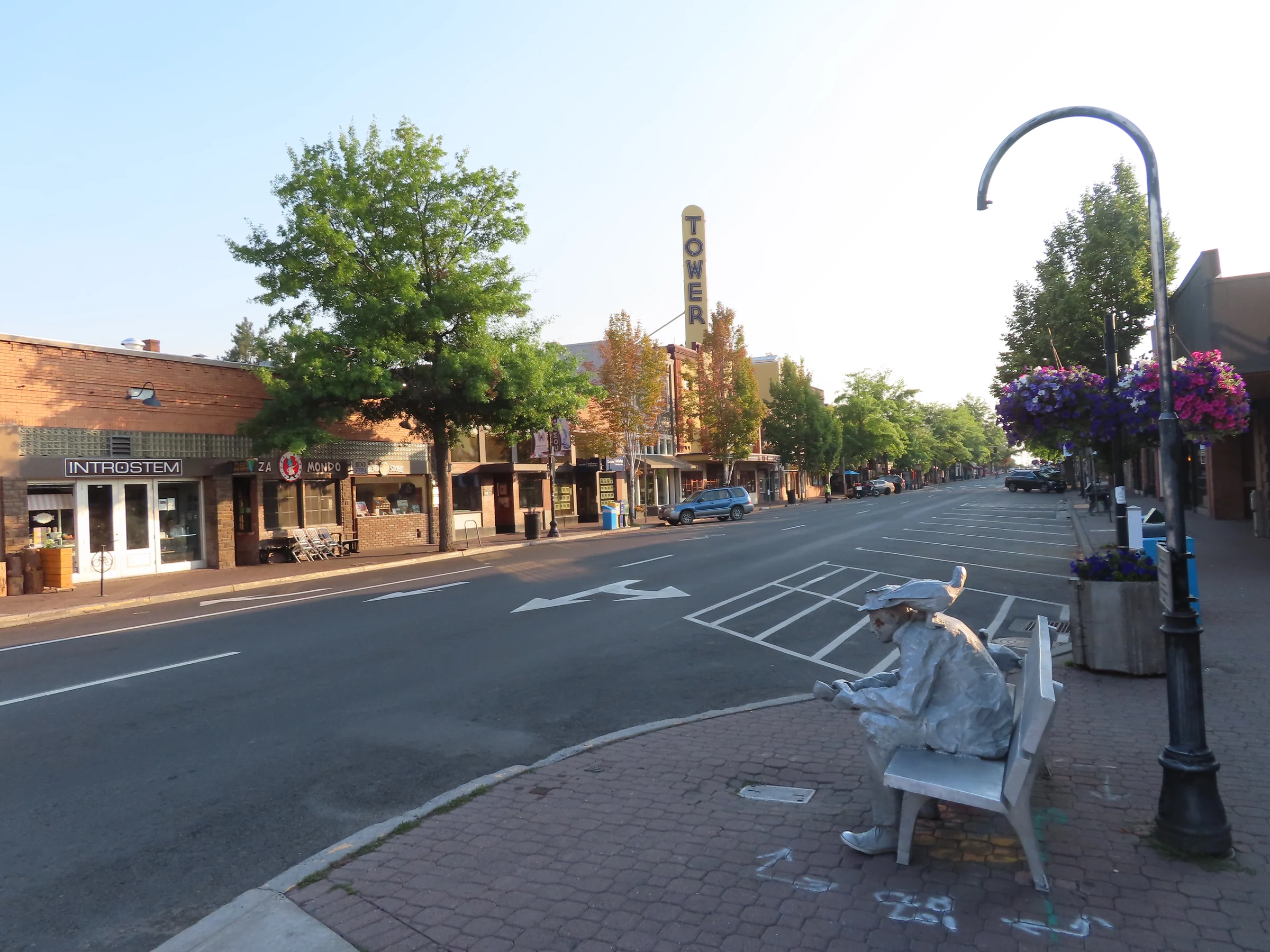
Sisters' downtown design code keeps every storefront looking like a late-1800s Western town, which means tall decorative facades sit in front of standard low-slope commercial roofs set back behind them. Those facades create their own maintenance zone, wind can catch behind a false front differently than it hits a flush storefront wall, and we check that transition point on every downtown Sisters inspection.
The retail buildings themselves are mostly smaller footprint than what we see in Bend or Redmond, single-tenant or two-tenant buildings with straightforward low-slope roofs, but the tourist traffic through town means these roofs stay under near-constant foot and vehicle activity below during the busy season.
Because so many of these buildings sit close together along a short downtown stretch, a roof project on one storefront often means coordinating with the businesses on either side about noise, dust, and material staging, even when the work itself only affects a single roof. We treat that coordination as part of the job rather than an afterthought, since a downtown Sisters merchant losing customers to construction noise during peak season is a real cost to that business.
Lodging Properties Tied to the Tourism Calendar
Sisters' hotels, inns, and short-term lodging properties fill up hard around the Sisters Rodeo, the Sisters Outdoor Quilt Show, and the general summer tourist season, and roof work has to route around those peak weeks the same way it does around any occupied hotel. We plan lodging property projects for the shoulder seasons whenever the scope allows it.
Smaller inns and bed-and-breakfast style properties around Sisters often run leaner staffing than a full-service hotel, which means less flexibility to shuffle guests around active roof work. We build extra communication into these projects, giving owners a clear day-by-day expectation of noise and access disruption so they can manage guest bookings accordingly.
The Light Industrial Park Off the Main Corridor
Away from the tourist-facing downtown, Sisters has a smaller light industrial park serving trades, storage, and small manufacturing tenants. These buildings are simpler metal construction without the false-front complexity of downtown, but they still need the same attention to snow load and seam condition as any Central Oregon metal building.
A survey in this part of town typically covers:
- Membrane and seam condition on straightforward metal building roofs
- Snow load distribution given the district's smaller structural spans
- Rooftop equipment for small manufacturing or trade tenants
- Drainage sized for short, heavy summer storm bursts
- General wear from sustained high-desert UV exposure
Highway 20 and McKenzie Pass Traffic
Sisters sits right at the junction of Highway 20 and the McKenzie Pass route, which means the town sees seasonal traffic surges tied to pass openings and closures each year. That traffic pattern affects how we schedule material delivery and lift staging downtown, since the main corridor through town gets tight during peak tourist weekends.
Wind, Snow, and Wildfire Smoke
Sisters sits close enough to the Cascades that wind patterns here can differ from what we see in Bend proper, gusts funneling off the mountains that catch loose flashing and coping. Winter snow load is a real factor on every roof in town, and we watch structural framing on the smaller, older downtown buildings especially closely once accumulation builds.
Wildfire smoke during dry summer stretches settles ash on every flat and low-slope roof in the area, and we've found that debris compounds drainage issues fastest on the smaller retail roofs downtown where drain capacity was never generous to begin with.
Elevation here runs close to what we see in Bend, so the UV load on any exposed membrane is similarly aggressive year over year, and we've found that owners who assume Sisters' cooler mountain feel means gentler sun exposure are usually surprised by how much surface wear a decade of high-desert summers actually puts on a roof.
We plan around the town's compact geography too, since almost everything commercial in Sisters sits within a short walk of everything else. That density makes it easier for us to bundle inspections across several nearby buildings in a single visit, which keeps costs down for smaller business owners who might otherwise put off a roof check simply because scheduling a standalone visit feels like more trouble than it's worth.
Sisters Roofing Questions
How do the downtown false-front facades affect roof inspections?
We check the transition point behind each facade closely, since wind can catch that area differently than it hits a flush storefront wall.
When is the best time to schedule roof work on a Sisters lodging property?
The shoulder seasons outside the Rodeo, Quilt Show, and peak summer tourist weeks, whenever the project scope allows that flexibility.
Does McKenzie Pass traffic affect roof project scheduling downtown?
It can. The main corridor through town gets tight during peak tourist weekends, so we plan material delivery and lift staging around those surges.
Is wind a bigger concern in Sisters than in Bend?
Sisters' proximity to the Cascades can bring different gust patterns off the mountains, and we check flashing and coping with that in mind.
How does wildfire smoke affect roofs in Sisters specifically?
Ash accumulation compounds drainage issues fastest on the smaller downtown retail roofs, where drain capacity tends to be less generous than on larger buildings.
Related
Ready to review the roof scope?
Request a Roof Assessment